
Quick facts
-
*Heat/Drought ALERT* Adapted to thrive in tough conditions, heat, and drought
*Low Impact Food ALERT* No energy intensive food processing necessary for winter eating
*Marginal Soils ALERT* Bloom where you’re planted! This crop is resilient and adapted to thrive on marginal soils with low fertility.
*Low Impact Food ALERT* This crop gets by on less. It needs less water and nutrient inputs than other foods.
*Diverse Population ALERT* Grow this population as is or use for your at home plant breeding project. It’s crop adaptation made simple- select those plants that grow best for you, save seeds, plant them next year, and repeat.
*Saving Kitchen Garden Traditions ALERT* This is a culturally significant variety traditionally grown for a specific culinary purpose.
- Large seeds for a wild tepary bean
- Long vines will climb a trellis
Phaseolus acutifolius
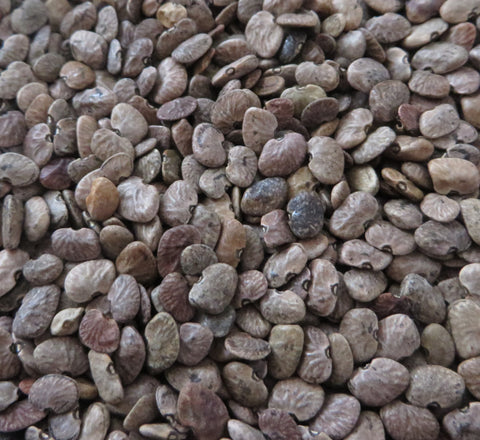
We got this seed originally from Native Seed Search where it was collected near Ruby Road at Sycamore Canyon, south of Tucson near the Mexico border. The seeds are speckled gray and relatively large for a wild tepary. This is fun look back at a domesticated crop's wild ancestor!
How to grow it:
|
Germ Temp |
Indoor Start |
Germ Days |
Frost Tolerant |
Sun |
Seed Depth |
Plant/Row Spacing |
|
75-85 |
Not rec. |
6-14 d. |
No |
Full |
.5” |
6”/10” |
| Tepary beans are native to North America and are heat and drought tolerant. Plant 1" deep and 6" apart after all danger of frost has passed. Do not over water. This bean will climb a trellis. Germination of wild tepary beans can be spotty, but can enhanced by scarifying seeds with sand paper prior to planting. |
Seed specs: Packet size: 50 seeds min.